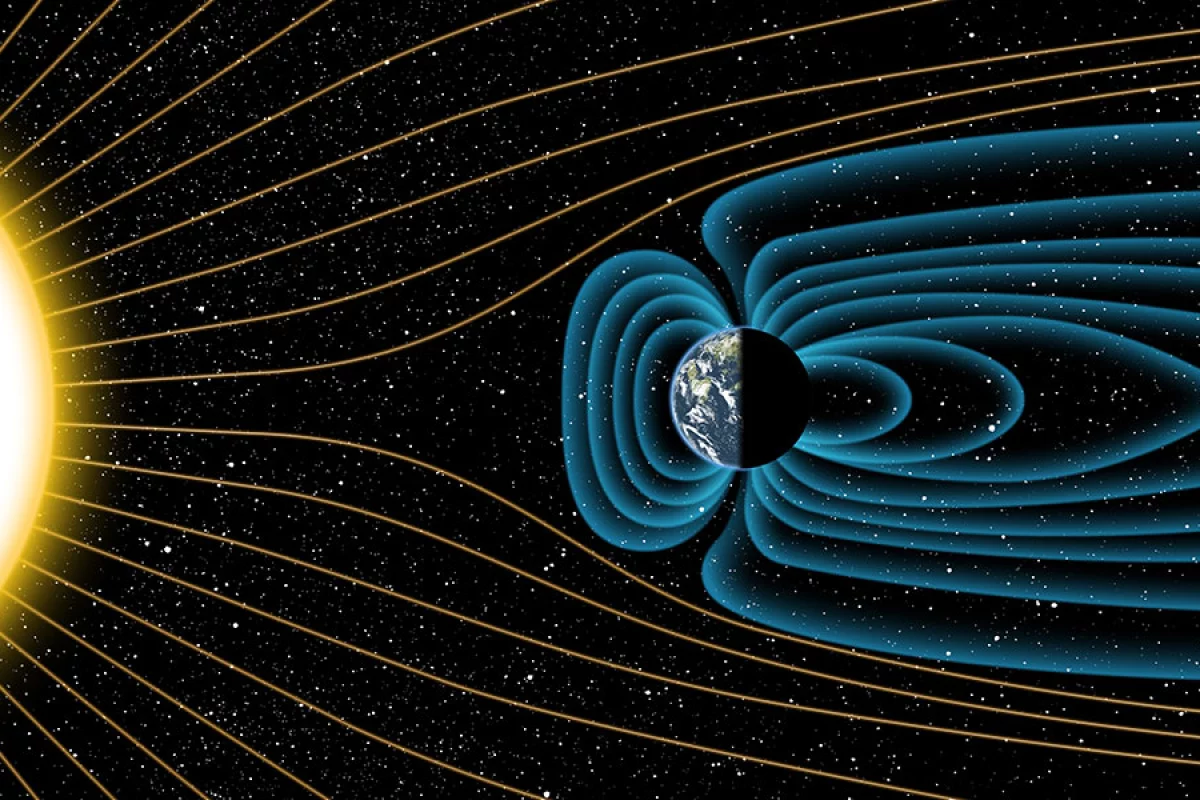
Earth’s magnetic field is often explained through the motion of molten iron in the planet’s core, but rocks play a far more active role than many realize. From preserving ancient magnetic signals to influencing local field anomalies, rocks help scientists understand how the magnetic field behaves, shifts, and sometimes weakens. For data-driven industries like sports betting and casinos, where risk modeling and geolocation technologies matter, this knowledge has indirect but real relevance.
The Basics of Earth’s Magnetic Field
Earth’s magnetic field is generated primarily by the geodynamo in the outer core, where liquid iron and nickel move under extreme heat and pressure. This process creates a global magnetic field that protects the planet from solar radiation and enables compass navigation.
Rocks do not generate the field itself, but they interact with it in measurable ways. Magnetic minerals within rocks align with the field during formation, effectively recording its direction and strength at that moment in time.
Magnetic Minerals Inside Rocks
Not all rocks influence the magnetic field equally. The effect depends on mineral composition, grain size, and thermal history. Igneous and some metamorphic rocks are especially important because they often contain iron-bearing minerals.
Key magnetic minerals include:
- Magnetite, the strongest natural magnetic mineral
- Hematite, which records weak but stable magnetic signals
- Titanomagnetite, common in volcanic rocks
These minerals allow rocks to store magnetic information for millions or even billions of years, acting as geological memory devices.
Remanent Magnetization and Geological Records
When rocks cool or settle, magnetic minerals align with Earth’s magnetic field. Once locked in place, this alignment becomes remanent magnetization. Scientists analyze this magnetization to reconstruct past field behavior.
What Remanent Magnetization Tells Us
By studying ancient rocks, researchers can determine:
- Past magnetic field strength
- Historical pole positions
- Timing of magnetic reversals
This data helps explain long-term field stability and periods of weakness, which are critical for understanding potential disruptions to modern technology.
Rock Structures and Local Magnetic Anomalies
Large rock formations can distort the magnetic field locally, creating anomalies. These variations are detectable by satellites, aircraft, and ground sensors.
Why Local Anomalies Matter
Local magnetic anomalies affect navigation systems, drilling operations, and geolocation tools. In industries reliant on precise location data, even small deviations can lead to errors. Understanding rock-based anomalies improves correction models used in GPS-dependent systems.
Volcanic Rocks and Magnetic Reversals
Volcanic rocks provide some of the clearest evidence of magnetic field reversals. As lava cools on the seafloor, it records the current magnetic polarity. Over time, symmetrical полосы of normal and reversed polarity form on either side of mid-ocean ridges.
This pattern confirms that Earth’s magnetic field has flipped many times and that rocks are essential to tracking these changes accurately.
Why This Matters Beyond Geology
At first glance, rock magnetism may seem unrelated to casino or sports betting news. However, modern betting platforms depend on satellite systems, secure data transmission, and accurate geolocation.
Disruptions in Earth’s magnetic field—especially during periods of instability—can impact:
- Satellite positioning accuracy
- Timing systems used in online transactions
- Communication networks critical to live betting
Understanding the geological factors behind magnetic behavior supports better long-term risk assessment in tech-driven industries.
Limits of Rock Influence on the Magnetic Field
Rocks do not control Earth’s magnetic field, nor can they prevent large-scale changes like pole reversals. Their role is passive but crucial: recording, distorting locally, and preserving evidence of magnetic history.
This distinction is important. While the core drives the field, rocks provide the data needed to predict trends and understand vulnerabilities.
Future Research and Practical Value
Advances in magnetic sensing and rock analysis are improving models of Earth’s magnetic field. Higher-resolution maps of crustal magnetism help refine satellite corrections and forecasting tools.
For industries built on real-time data and global infrastructure, these improvements translate into more reliable systems and reduced operational risk.